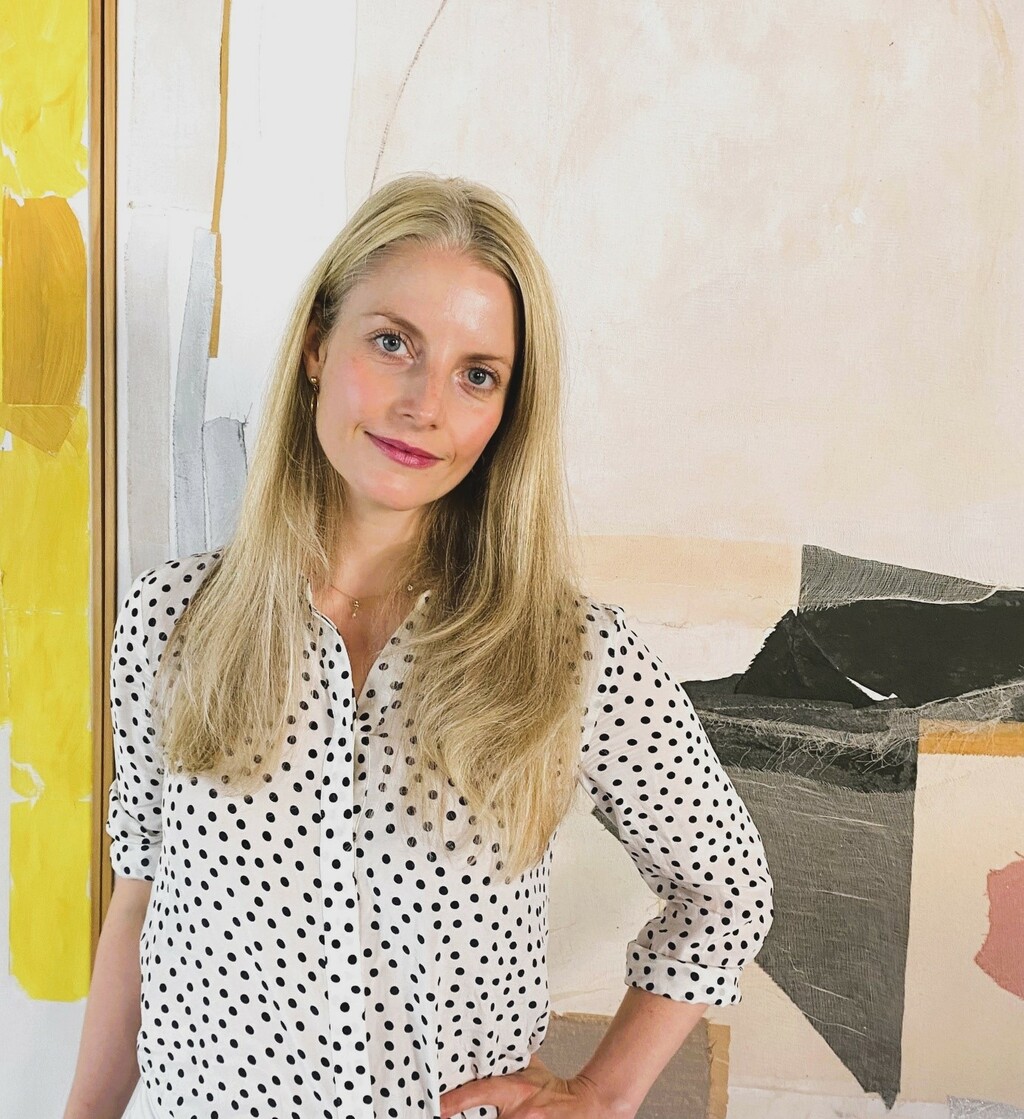
Profile


I was awarded my Doctor of Philosophy (PhD) in 2012 from Goethe University Frankfurt/Main. I studied philosophy, art history, and archaeology in Frankfurt, as well as at the University of Freiburg and the University of Basel in Switzerland. In addition, I hold a postgraduate degree in Cultural and Media Practice from the Institute for German Literature and Didactics in Frankfurt, as well as a Diploma in value-based systemic coaching from the Swiss Coaching Academy St. Gallen.

I have taught and conducted research in philosophy, with a focus on ethics and aesthetics, at a range of distinguished academic institutions. During my doctoral studies, I held a Max Planck Scholarship at the Max Planck Institute for European Legal History in Frankfurt, where my research focused on Jürgen Habermas’ theory of communication and truth as well as American pragmatism. I have worked as a Visiting Researcher at the Faculty of Philosophy at the University of Oxford (UK) and as a Mathilde Planck Scholar at the University of Applied Sciences Konstanz. My academic work has further included affiliations with the University of Konstanz and the Basel Academy of Art and Design, as well as contributions to the BMBF Professorship Program at the Institute of Design Research in Darmstadt. I also served for two years as Visiting Professor for Perception Theory in Art & Design at the University of Art and Design in Offenbach. Since 2018, I have been based at Darmstadt University of Applied Sciences, where besides teaching, I served as local Head of the European Culture and Technology Lab and have held the position of Professor of Practical Philosophy and cultural Philosophy.

Alongside my academic work, speaking engagements, and keynote appearances, I have been deeply engaged in the arts and have worked for many years as an entrepreneur in the cultural and design sector. I co-founded the magazine Critica and ran my own consultancy company for art and design projects for over a decade, which I realized in collaboration with international museums, institutions, companies, and a wide range of artists and designers.

Across all my work, I have consistently focused on sustainability, particularly social sustainability grounded in ethical values, gender fairness and sensitivity, intersectional awareness, inclusion, and individual wellbeing, often explored through the lens of arts, design, and technology. Over time, my interest in neuro-aesthetics and psychology at the intersection of philosophy and aesthetics has deepened, especially in relation to how art, design, and technology can serve healing and transformative purposes. More than shaping my academic perspective, these experiences and research interests have profoundly informed my commitment to coaching for social sustainability within organizations and for individuals.  


Projects

Materialization of Fairness

Gender in Design & Tech (Barbara Budrich Publishing 2026)


Women are still under-represented in tech and design areas and therefore their demands often neglected or overseen, we know that efforts need to be made to address the gender gap at all levels in academia and the workplace. For young researchers and professionals the amount of material on gender theories etc., the issues arising when dealing with tech and design from unilateral and stereotypical perspectives have grown in number over the last years. Unfortunately, only the “bad” side often gets into focus. What is lacking are the presentation of the materialization of real changes and the mechanisms used for this. This book is meant to show such efforts and projects from academia to industry and from product design to engineering also highlighting the interrelation between educational, social, economic and ecological factors in the pursuit not for plain equality but gender fairness.


Ethico Project

Horizon Europe (project member , project ended 2023)


Was an Erasmus + project of the European University of Technology. The main Idea was that Ethics traditionally understood as applied ethics is not equipped to deal with the questions posed by the relation between technological development and ecology. The application of pre-existing ethical frameworks has not led to the desired results and has been reduced to the introduction of ethics onto the engineering degree programs. This is partly to the cultural contexts of technological innovation and on the other hand to the sheer speed of technological change. The EthiCo project developed specific methodologies of the ethics and ecology within the education not just of engineers but all students within higher education and also a teacher training module for the teaching and integration of ethics into the curriculum (including engineering, natural sciences, business, arts and humanities). https://www.univ-tech.eu/projects 


Design & Gender

(E-book, Institute of Design Research)


This is a open access book about the issues that women have to face today in product design – from education to praxis. In addition to a historical outline of the problem, it contains above all presentations of the work of internationally successful women designers as well as the evaluation of a series of interviews with women designers that shed light on unconscious mechanisms of genderization and their consequences. The basic idea was to provide an incentive to engage with contemporary product worlds and their female creators and not only with the male icons of design which is exactly what happens very often in design education due to a lack of proper material.


Philosophy and Design

Anthology, ed., Transcript Verlag, 2016


This book (anthology) is gathering insights into the philosophically long neglected entanglement of philosophical thoughts and the design discipline in general as it refers more to the daily and routinized experiences within live worlds. It deals with the neglect of everyday worlds by philosophy as a theory of art but also with ethical aspects in design. It was a follow up publication based on a international conference in Freiburg.


Das Realitätsproblem bei Jürgen Habermas und die Philosophie des Pragmatismus- für einen erweiterten Repräsentationalismus. 

Monografie 2013


My first publication, which centers on truth and epistemological issues within the communication and consensus theory of Jürgen Habermas. It also explores the idea of a widened understanding of representationalism in relation to Richard Rorty, Hilary Putnam and Charles Sanders Peirce. It was awarded by the Geschwister Böhringer Ingelheim Stiftung, Germany.


I have been presenting findings from my research in presentations as a key note, as moderator and host of conferences, in diverse media and articles. If you  are interested in one of these topics, presentations or articles I’d be happy to share.

Here’s a selection from recent years:


Gender Justice, Darmstadt Louise Büchner, Lions Germany 2024 

Speculative Design & Diversity, University of applied arts Basel Switzerland, 2023

Diversity in Design Studies, University of applied arts Basel Switzerland, 2022

Gender Equality & Diversity in Design conference, host and Speaker together with Schader Foundation Darmstadt 2021

Gender Equality and Diversity in Design Teaching, New European Bauhaus Conference, HBK Saar 2021

Design & Humanism (2021), HFG, Offenbach

Design Aesthetics between Aisthesis and Cognition , Academy of Arts, Stuttgart 2020

The Gendered Bauhaus, Staatstheater Darmstadt, Bauhausjubiläum, 2019


 Articles

Form und Funktion. Eine kritische Betrachtung zeitgenössischer Designästhetik, Schwerpunktthema Design & Philosophie in: deutsche Zeitschrift für Philosophie DZPhil 2020; 68(3) , S. 410-424.

Philosophische Ästhetik und Design, in: Daniel Feige, Florian Arnold, Markus Rautzenberg (Hrsg.): Schriftenreihe des Weißenhofinstituts zur Architektur- und Designtheorie: Die Philosophie des Designs, transcript Verlag 2020, S 307-326

With all senses – Perspectives in Design Aesthetics / Mit allen Sinnen. Positionen der Designästhetik, in: Form, Nr.284, Region of Design, July/August 2019, S. 97-101. (English/German)

 Philosophie und Design. Eine Einleitung, in: Design und Philosophie, Schnittstellen und Wahlverwandtschaften, transcript Verlag, 2017 , S. 6-17